The rare species was spotted about 900 kilometres away from its previously known habitat in Western Australia. The sighting occurred at Dakalanta Wildlife Sanctuary, located on the traditional lands of the Nauo People.
While photographing orchids, orchid enthusiast Shane Graves noticed a small, colourful spider jumping through the mallee bush, its vibrant abdominal flaps shimmering in the sunlight. Recognising it as a Maratus australis, he quickly snapped a few pictures and shared them with a Peacock Spider Facebook group.
“I was able to maintain my distance and observe the little guy for a while, but every time I tried to take a photo, he would just jump away. I managed to get a couple of good pictures that I later shared on a Peacock Spider Facebook page to help identify the species,” Shane said in press release.
The Maratus australis, also known as a type of Peacock Spider, is famous for its spectacular jumping ability. Although the species is small (around 3–5 millimetres in length), it can leap up to 40 times its body length, making it one of the most impressive jumpers among the 6,000 species of jumping spiders.
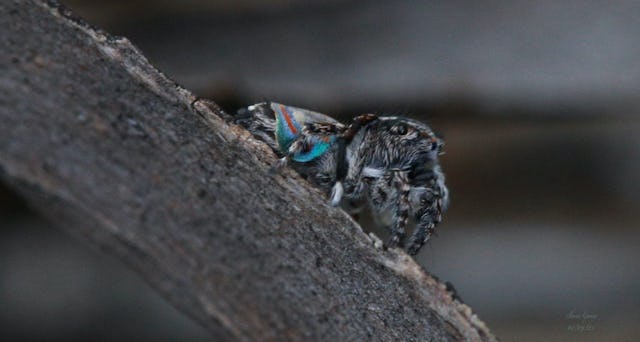
First sighting of a Maratus Australis outside in WA, found on Dakalanta Wildlife Sanctuary. © Shane Graves
Males are particularly easy to spot during breeding season, thanks to their colourful abdominal flaps that they use to attract females. What’s interesting is that the sighting occurred in early spring, when the male spider had already begun displaying its vibrant breeding colours. This could suggest that the species breeds earlier in South Australia compared to its counterparts in Western Australia or that the environmental conditions in the region are influencing the spider’s behaviour.
While AWC doesn't regularly monitor arachnids, the team at Dakalanta Wildlife Sanctuary will be keeping an eye on the species in hopes of gaining more insight into its population, distribution, and breeding habits.
Learn more about AWC’s work here.
Image credits to Shane Graves.
Planet Ark does not take responsibility for the accuracy of the original information and encourages readers to check the references before using this information for their own purposes.